It was a lukewarm morning in Alexandria. I was continuing to work on my final math project for AP Calculus, sitting with a group of friends out in the commons, chit-chatting about what we were going to do with our potential startup idea. I was sketching out possible designs in my notebook for the 3D printing side of the startup when suddenly, my friend got an email.
"I got an email from the GMU Debate Team," he said.
I leaned over to see. It was an invitation to an interest meeting. Reading off the screen: "As you begin your college journey, we invite you to become part of one of Mason's most exciting and successful organizations — the George Mason University Debate Team!"
"I haven't gotten that email," I said. My other friend had also received it, which made me feel left out for a few minutes. "Might be the slow email servers. Could you forward it to me?"
"Are you guys interested in joining?" I asked them.
"No, not really," they replied.
"Well, it looks interesting. I think I'll go check it out," I decided.
The timing was interesting. I was getting really interested in government and law, and I was a bit disappointed that I hadn't really stretched my horizons outside of STEM. At the time, I never really thought of myself stepping into a club or activity that wasn't related to technology or engineering. I considered myself to be a poor writer and public speaker, despite being confident in my technical work.
The Interest Meeting
A week and a half went by, and it was the day of the interest meeting. It was online at 6 PM, leaving plenty of time after school to get into the Zoom call. I was hanging around in the computer systems lab, playing with the servers and upgrading batteries before I had to depart.
I left the lab, headed to the bus loop, and caught the bus home. Along the way, the bus actually crashed and had to pull into a tight roadway to stop. It took an hour to get a replacement bus, only for that bus to miss our stop. By the time I finally got home, it was 5:55 PM. I rushed upstairs, grabbed my laptop, and logged into the Zoom call just in time.
I was greeted by the director of the debate team, Jackie, and introduced to the officers of the club. Jackie was really welcoming and friendly, which made me feel a bit more inclined to join. The meeting covered the structure of debate, the style, and the topic (or resolution) for the upcoming school year.
I signed up via the "intent" form right after the meeting, but between then and the first summer meeting, life got busy. I finished up my last day of TJ, onboarded new sysadmins, handed the "torch of power" to the new leads, and graduated.
The Bootcamp & The Doubts
A whole summer went by. Days away from the debate bootcamp—a weekend-long crash course to get new debaters up to speed—I was chatting with one of my friends who was also interested. We were discussing something that had been on my mind for a while: should I actually continue with debate? I was conflicted. I had a startup I was excited to work on, and I was worried about my ability to keep up with the team.
Me: "tbh idk i feel like its too much know and understand"
Me: "we have the bootcamp thing this weekend"
Me: "and i'm questioning whenever to continue doing debate or just something else"
Friend: "yeah same"
Friend: "yeah and didn't you also want to work on [Heliothon]?"
Friend: "the project you were talking about"
Me: "Yeah heliothon"
Me: "that also is kinda making me think twice abt debate"
Me: "Bc I do want to work on that"
Friend: "yeah i think it'll be more fulfilling to work on heliothon than join debate"
II hearted his message. I felt at that moment that I was going to part ways with debate. But then I thought to myself, "What if I regret not trying it out?" After a long pause, I texted him back.
Me: "ngl I feel like we just go for it and if it doesnt feel good or feels too intensive we can just drop from it"
Friend: "ok yeah let's do that"
Friend: "there's no hurt in trying to"
We went to the bootcamp that weekend, and it was a whirlwind of information. We learned about argumentation, speech structure, flowing, and most importantly, the community. After the first day, I felt more inclined to continue; the community was welcoming, and I felt I could learn a lot. Unfortunately, my friend couldn't make it to the second or third day, so I was alone with people I'd never met. Following bootcamp, I planned to meet my friend to catch him up, and we seemingly were on the same page about continuing. Or so I thought.
A week and a half before our first tournament, I was prepping out a 1AC and 2AC, teaching him about debate, setting up a possible 1NC, and doing everything to prepare. I was texting him daily about it. Then, I got a text:
Friend: "btw I appreciate the work you're putting in, ngl i think i might quit debate"
Me: "wait what why?"
Friend: "the topics don't really interest me, and it's a big time commitment. I've also became a part of something that I'll have to commit more time to and just the format in general"
Me: "ngl i feel u, but i feel like ur dropping too early. the topics are different each year and i think the way policy debate works is more the research siderather than speech. rn all we r doing is just practicing speech and i think after like a month or so ur going to start getting used to it"
Me: "i don't want to pressure u or anything, it's honestly a huge time commitment"
Friend: "yeah I understand that but i think i'll drop"
Friend: "and if i happen to become interested in it in the later future, I can always come back as a novice"
Just like that, my debate partner and my only well-acquainted friend dropped out. I was disappointed to face a group of new faces on the team alone. But I was determined to continue; I had already invested so much time and effort, I wasn't going to let it go. I reached out to Jackie about my partner dropping, and she paired me up with a new partner, whom I'm going to call Born Ready Sanchez (BRS). Me and BRS both started to get along with really well.
George Mason
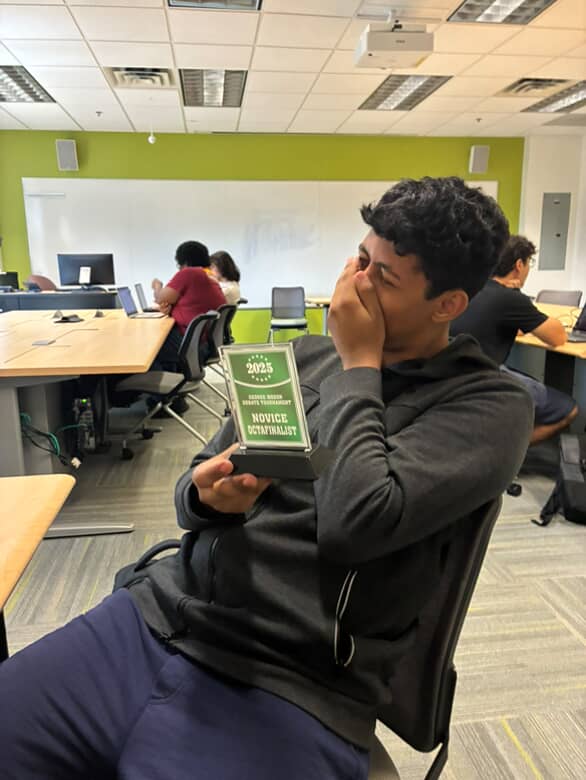
BRS and I were both excited and nervous heading into our first real tournament on home soil at George Mason University—neither of us had any idea what to expect. We'd only done one practice debate round a week before, but it wasn't nearly enough to prepare us for the real thing.
We entered our first round as the negative side against a team from Binghamton. We shook hands and chatted a bit beforehand, which helped calm our nerves. The round started off rocky; we struggled with cross examination (cross x), and after our 1NC, we felt a bit lost. They were strong speakers and dissected our arguments effectively, pointing out that the uniqueness link in our inflation disadvantage contradicted the one in our productivity disadvantage, putting us in a tough spot. We spent the entire round scrambling to respond. After the 2AR, we were convinced we'd lost, but to our surprise, we won. We still don't know exactly how, but it was a massive confidence boost, and we felt ready for the next challenge.
In round two, we were affirmative against a team from Rochester and pulled out a surprisingly narrow win—mostly because we nearly dropped their automation disadvantage in the 1AR, but they didn't catch it. The next day, we faced another Rochester team with experience from the previous school year, which made us a bit nervous. We were affirmative again, and they hit us with topicality (T), which was odd given our highly topical plan text. Still, we'd heard other teams were losing to T arguments, so we defended hard and won, leaving us more confident than we'd imagined possible—a huge contrast to the tournament's start.
Unfortunately, that was our last victory. In round four, against yet another Rochester team (this one with a debater transitioning to JV), their experience showed, and we lost. The fifth and final prelim round was against a team from Liberty. By then, BRS and I were mentally drained, and it didn't help that they were exceptionally strong. We lost, and the defeat puzzled us at first—until we realized we needed to tailor our negative arguments to specific opponents rather than using a one-size-fits-all approach.
We finished prelims at 3-2, a solid record for our debut, and importantly, we broke into elims. We lost in octofinals to the same Liberty team from prelims. At the time, I was disappointed and felt we could have done better, but looking back, it was our first tournament. We learned a ton, and I knew we had room to grow.
West Point

BRS and I headed to our second tournament at West Point, the US Military Academy in New York—the first one requiring travel. Leading up to it, we'd begun serious prep: crafting 1NC blocks, building a solid 1AC, and practicing speeches. We were aiming high, hoping to go the distance and maybe even win.
We arrived at West Point in the afternoon after hours of travel. The campus was stunning, but our nerves ramped up as we neared Thayer Hall, the tournament venue. Our first round was against a familiar Rochester team from GMU, and we were determined to start strong. I've always believed that winning the opener sets the tone and builds crucial momentum. After the 2AR, we felt solid—we hadn't dropped evidence, we'd kept them on their toes during cross x, and our speeches held up well. To our surprise, we lost. It wasn't a blowout, but we simply weren't offensive enough to clinch it. Our confidence dipped slightly, but it taught us we needed to amp up our attacks.
Round two, against Boston College, felt essential for getting back on track. They ran a prisoners' advantage—the first truly unique one we'd encountered. The round proceeded normally until their 2AC: after finishing, they just stood silently, staring at the judge for the remaining minute and a half. It was baffling but oddly amusing. We won, but only on presumption, meaning we hadn't dominated outright. Still, a win's a win, and it kept us in the game.
The next day, round three pitted us affirmative against Suffolk on negative. They hit us with the Capitalism Kritik (Cap K)—our first K debate. Midway through, they accidentally mixed in elements of a Disability K, which confused us. In cross x, we clarified, and they admitted it was a slip-up. Undeterred, BRS covered both in the 2AC, and we pulled out the win. Looking back, this might have been our best round ever: strong speaker points, we had them scrambling on their Ks, and we addressed every argument thrown our way. It was the perfect debate, a rare high we wouldn't hit again, but it skyrocketed our confidence.
Round four, as negative against New School, was tough—they ran a unique social security affirmative that was excruciating to counter. Deep down, we knew their plan could benefit society, but debate is debate; we had to argue against it. We faltered and lost, dropping to 2-2 heading into round five. We desperately needed a win to stay in elim contention. Against Binghamton, they ran a movements disadvantage and a states counterplan, but bizarrely spent 80-90% of their time attacking our evidence dates (2017-2023) as outdated, barely engaging our core arguments. Their counterplan lacked a complete text, which we pointed out while still responding to avoid a drop. We won comfortably and advanced to round six against another Rochester team. Before starting, we joked with them: "This decides whether we head to doubles or not." Both at 3-2, it was do-or-die. After a hard-fought battle, we lost—disappointing, but I wasn't devastated.
That's when things got wild. During the judge's RFD, our coach burst in, pulling us out to prep for doubles. BRS and I were flabbergasted—we'd been joking about it, and now it was real. We weren't mentally or prep-ready. Rushed to the hall, we faced Liberty on negative, which threw me off; everything felt like a blur. In the team room, I couldn't focus, skipped eating, and felt my mind fading in and out. The round started disastrously: we were scattered, and their aggressive cross x amplified it. After the 2NC, we had a mini-breakdown, feeling overwhelmed, but we agreed: "Win or lose, we push through." We regrouped, piecing it together speech by speech. By the 2NR, we were calm and collected—and shockingly, we won. We had no idea how, but it happened.
The next day, octofinals brought a familiar Liberty team from GMU—the top seed, undefeated across two tournaments. As affirmative, we sprung a sneaky plan to trap them. We started strong, then deployed it after their neg block, boxing them in. Their 2NR prep was visibly stressful—and rightfully so; we had them cornered. At the end, we felt we'd nailed it, and to our astonishment, we won—a massive upset against the unbeatable. For us, it felt like claiming the whole tournament. We advanced to quarters, defeating the last Binghamton team (running a fascinating Nietzsche K affirmative) in a 3-0 sweep, then hit semifinals against West Point. That was our wall; we lost convincingly, 3-0. In hindsight, we were just drained mentally and physically, unable to match their energy. Still, reaching semis in our second tournament ever was something to be proud of.
Oklahoma
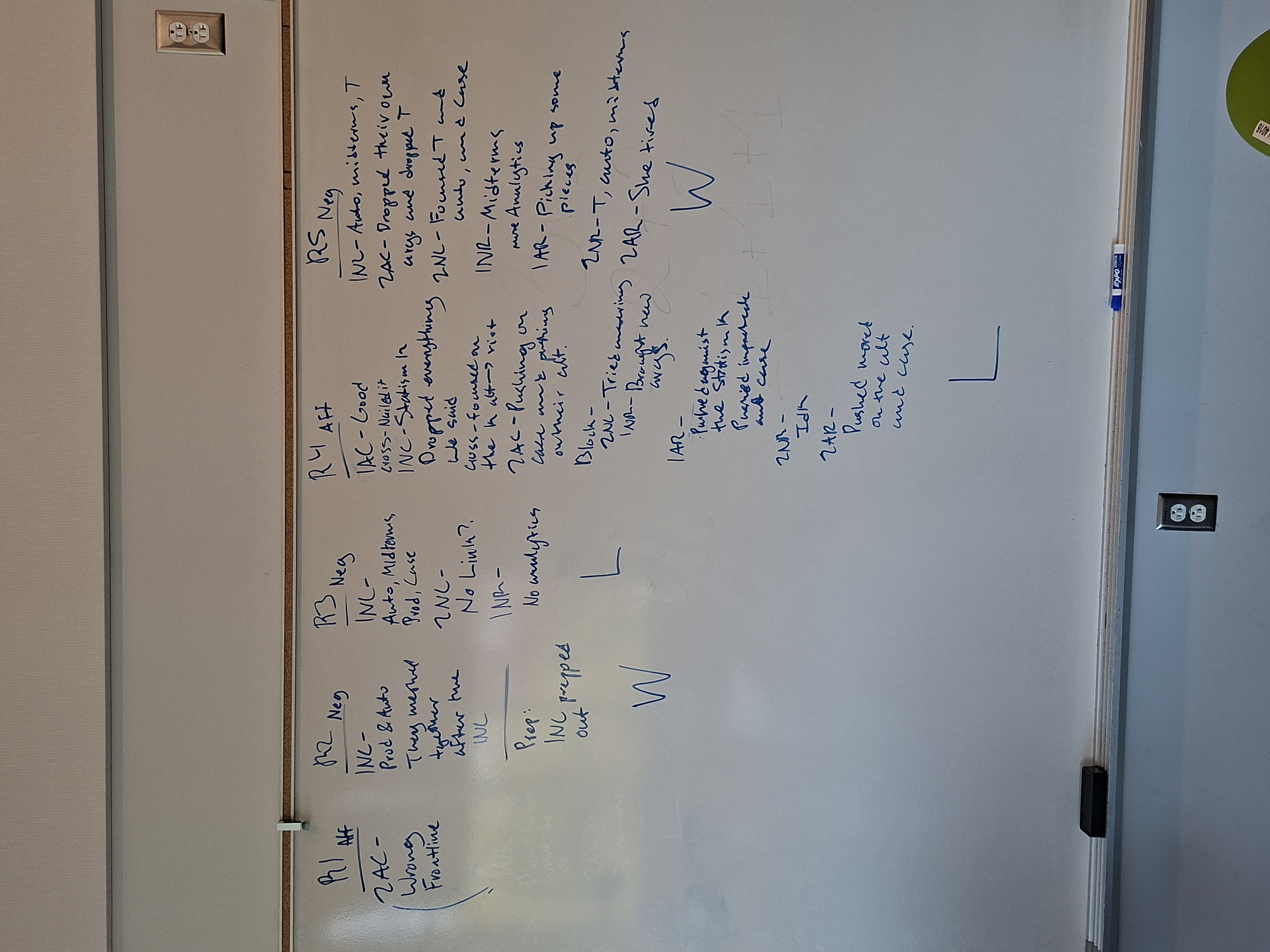
Our third tournament was at Oklahoma, marking our first online event—which meant debating from the comfort of home. We approached it as a "practice tournament" given the smaller field, focusing primarily on sharpening our cross x skills, a glaring weakness from West Point that had cost us rounds. Four of our six prelims were against Liberty teams, and we split them evenly, winning half.
This was also our debut facing an agricultural workers affirmative, which I'd prepped extensively beforehand—we cruised to a comfortable victory there. The round that stung the most, though, was against UT San Antonio. They ran a Statism Kritik, and thanks to stellar coaching, we were well-prepared. Yet, we botched the rebuttals somehow and lost—a frustrating fumble.
We finished prelims at 3-3 and failed to break into elims, a massive letdown after the highs of West Point. It took me a while to shake off the disappointment; I truly believed we were capable of so much more.
Wake Forest—Nationals
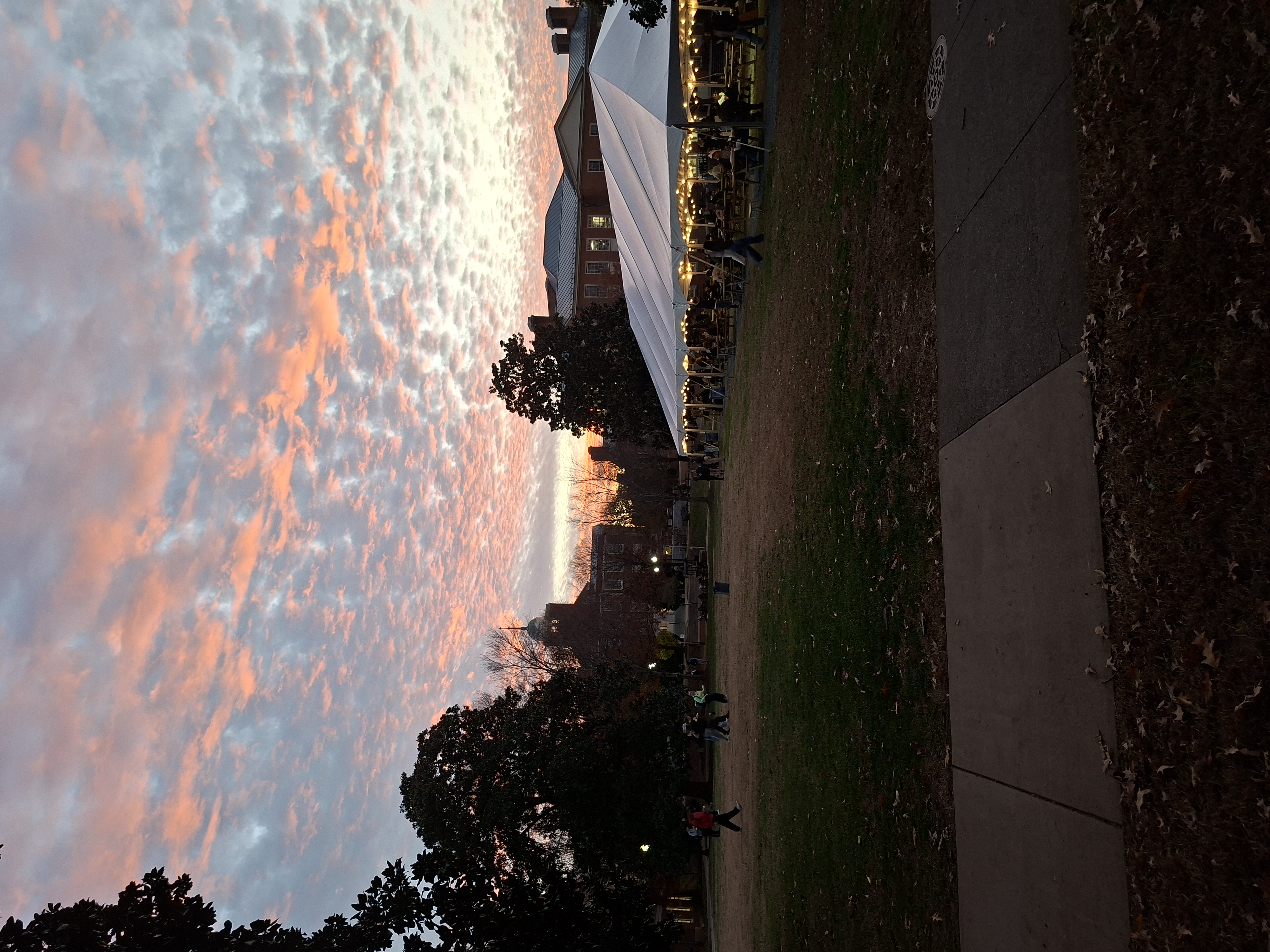
This was the big one—the tournament where we'd finally test our prep, our spreading skills, and our edge against top teams. BRS and I arrived the day before, buzzing with excitement and confidence. We were ready to face off against familiar opponents we'd scouted. That night, we drilled each other with cross x questions, poking holes in our arguments to anticipate any weaknesses the other side might exploit.
The first day kicked off with our opening round against a team from Texas—it was their very first tournament. We figured they'd stick to something generic in the 1NC, like automation or econ impacts. Instead, they hit us with an antitrust disadvantage, a curveball I'd never even considered. As the affirmative, we used our prep time wisely to adapt. We delivered a solid 1AC and cross x, but their 1NC skipped case entirely. The debate was intense and back-and-forth, and to our surprise, we lost. It stung because we felt we'd performed strongly—probably our best first round ever.
Next up was Boston College, where we had them dead to rights on topicality, but I couldn't seal the deal in the 2NR. Another loss. For the first time ever, we were 0-2. I was furious and deflated. We'd dreamed of going 4-0 or at least 3-1, but now elimination rounds felt out of reach. While every other team from Mason was sitting at 2-0, I skipped lunch and just sat in the room, replaying what went wrong. I couldn't shake it off.
Hours later, still reeling, we headed into round three against New Mexico via Zoom—they were virtual. We were affirmative again, running our standard plan. They countered with just court clog, making our prep straightforward since we only had one argument to dismantle. Technical glitches plagued the round; at one point, their 1NC cut out entirely due to Wi-Fi issues, forcing a delay. We won handily—the judge delivered the decision faster than I'd ever seen. It kept our slim hopes alive for a 4-2 finish, but honestly, the victory felt hollow amid the tech problems and their limited strategy.
Round four pitted us against Trinity on the negative. I'd prepped extensively for what I thought was their ag workers affirmative, excited to unleash my blocks. But disclosure revealed a disability K affirmative—a meta-debate about debate itself—something I'd never expected as a novice in my first semester. It threw us completely; we had just 10-15 minutes to scramble. Our coach swooped in with key pointers, but it wasn't enough—we dropped on framework. Now 1-3, the tournament was slipping away.
After that, I was devastated. How could we be 1-3 after all the grinding, research, and sacrifices done? I blamed myself for not prepping broader, for assuming too much about opponents' strategies. I barely ate, opting for some team ice cream instead, and sank into a somber mood. The path to elims was all but closed. That night, I skipped prep and crashed early, drained of motivation.
The next morning, I woke up still down but determined to push through. Round five was negative against another New Mexico team. We assumed ag workers again, but surprise—they ran something entirely different. Luckily, our coach hooked us up with solid case arguments, easing my 2NC. We pulled out a win on topicality, boosting us to 2-3 and teasing a 3-3 break.
Our final round was affirmative against Towson. We dominated: sharp cross x kept them off-balance, and one question even forced them to kick an entire disadvantage. It felt like our strongest performance yet. But another loss sealed our fate at 2-4—a crushing end to the semester after all the training and hype. Nationals taught me resilience, but man, it was a tough pill to swallow, and a tournament that I still to this day feel the effects of.
Post-Season Thoughts
After Wake, I took a step back to reflect on the whirlwind of the past six months since diving headfirst into debate. It all started with that simple Google Form I filled out in high school—a leap into the unknown that pulled me far from my comfort zone. Little did I know how deeply invested I'd become. I'm grateful to my younger self for that bold move; without it, I might have missed out on this transformative experience.
What stood out most was the connections I forged. From my teammates—fellow debaters who became close friends—to our dedicated coaches, the sense of camaraderie was unmatched. Competing against schools from across the country introduced me to a diverse array of perspectives and innovative arguments I'd never imagined. It broadened my worldview in ways textbooks never could.
Debate has honed a crucial life skill: the ability to argue both sides of any issue with conviction. As I like to say, "If you can passionately defend the side you disagree with, you truly understand the topic." It's not just about winning rounds; it's about empathy, critical thinking, and dismantling assumptions—tools that extend far beyond the debate room into everyday life, from heated discussions with friends to navigating complex real-world problems. Debate feels like a good extention of what I did my senior year of high school, which was fighting misinformation and having nuanced discussions about complex topics with people.
Looking ahead, I'm excited to continue this journey. Debate has ignited a passion for advocacy and public speaking that I plan to nurture throughout college and beyond. The skills I've gained are invaluable assets that will serve me well as an engineer. More than anything, debate has taught me the power of words and ideas to effect change, a lesson I'll carry with me always.
Glossary of Debate Terms
This article contains words that may not be familiar to those outside of debate. Here's a quick glossary:
Resolution — The statement the debate is about. One side defends it, the other argues against it.
Affirmative — The team supporting the resolution and proposing a plan to fix a problem.
Negative — The team opposing the resolution or arguing the affirmative plan is a bad idea.
Plan — The affirmative's specific proposal for how to solve the issue in the resolution.
Advantage — A benefit the affirmative claims their plan creates.
Disadvantage — A harm the negative argues will happen if the affirmative plan is adopted.
Counterplan — An alternative proposal from the negative that solves the problem in a different way.
Kritik — An argument that challenges assumptions or ideologies behind the affirmative, rather than their plan details.
Framework — The debate over what the judge should prioritize: policies, philosophy, impacts, or something else.
Uniqueness — Whether the negative impact or harm is already happening or will only happen if the affirmative plan passes.
Topicality — Arguing the affirmative's plan doesn't fit the meaning of the resolution.
Cross X — Short for cross-examination. A period where one side questions the other directly.